Discover how Oxford’s researchers are tackling the world’s most pressing biodiversity challenges, sharing inspiring stories of innovation, collaboration, and lasting global impact that connect science with conservation action.
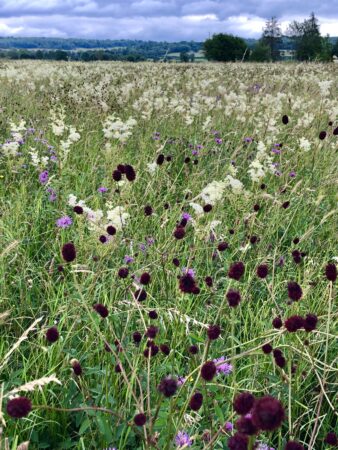
Yadvinder Malhi shares his rediscovery of nature at the local level Like many, I have found solace and refuge in local nature over this year of pandemic and lockdown. When able to escape from Zoom calls and cabin fever, I’ve wandered and exercised in my local floodplain meadow of the Thames. I’ve used books and […]
Join us on October 22nd 2026 at 10.30 in Seminar rooms 1&2 in the Oxford Martin School for refreshments and pastries, at 11am our speaker will join us for an informal talk. 4 million UK votes for nature. The Why and How of school-based nature education (a brief introduction). Kim Polgreen. Dept. of Education & […]
Dr Dan Challender and Dr Amy Hinsley discuss a new paper in which they evaluate the potential of ‘reverse listing’ to regulate international wildlife trade, highlighting that this approach is not a panacea. Globally, people use and trade at least 50,000 wild species for food, medicinal products, construction materials, and to support their livelihoods, among […]
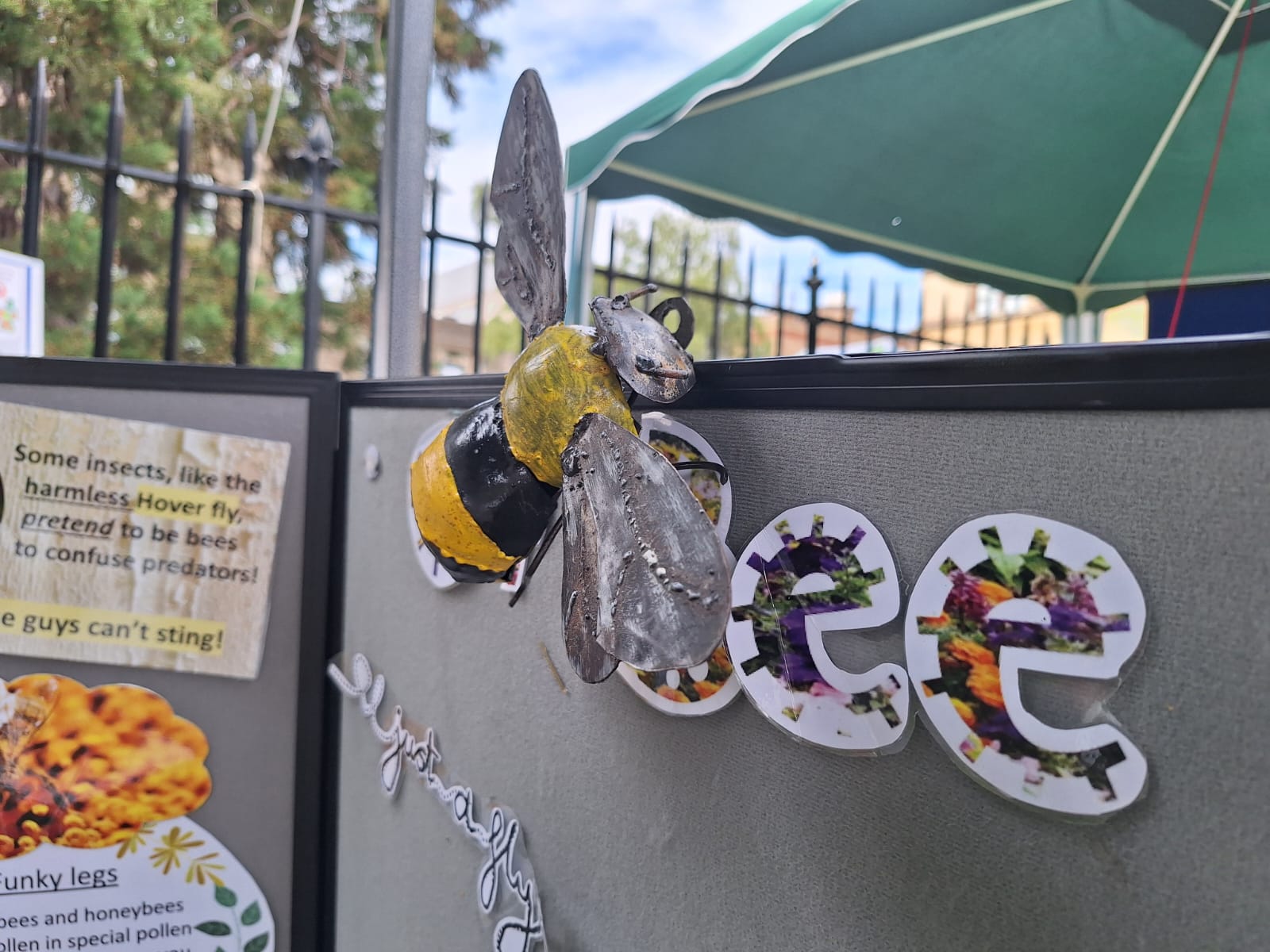
Celebrating a Remarkable Nature Festival 2026. On Saturday 27 June, as Oxfordshire experienced one of the hottest days of the year, hundreds of people came together for something worth celebrating: a festival that connected people with nature, with each other and with the inspiring work taking place to protect our environment. Despite the heatwave, The […]
We are recruiting up to three short-term research assistants this spring/summer to assist with biodiversity data collection near Oxford. Fieldwork assistants will join a small team surveying insects, plants, mammals and birds at Begbroke, north of Oxford, where the University of Oxford is planning a major infrastructure project. We’re looking for people with fieldwork experience, […]
This Valentine’s Day, millions of pounds worth of chocolate were exchanged as gifts, but researchers have found climate change and biodiversity loss threaten future global supplies of this treat. A new study led by the University of Oxford has found that cocoa production—the key ingredient in chocolate—is at risk due to climate change and low […]
Caitlin Hafferty, Postdoctoral Researcher at the Environmental Change Institute, has recently been awarded an Oxford Policy Engagement Network (OPEN) Fellowship to explore the role of risk and uncertainty in shaping high-integrity nature markets in the UK. The project – conducted in partnership with the Green Finance and Capability Team at the Department for Energy Security […]
We are delighted to announce that Dr Youngho (Young) Kim, a Postdoctoral Research Fellow in Environmental Economics, has been awarded the Wallace E. Oates Outstanding Doctoral Dissertation Award for 2024 by the Association of Environmental and Resource Economists (AERE). This prestigious award recognises Dr Kim’s outstanding contribution to the field through his doctoral research at […]
If you are a member of staff, visiting researcher or a student at the University of Oxford, and you would like to feature your profile, or that of your research group on this website, please give us a few details and we’ll do the rest. To add your profile to the website click here To […]
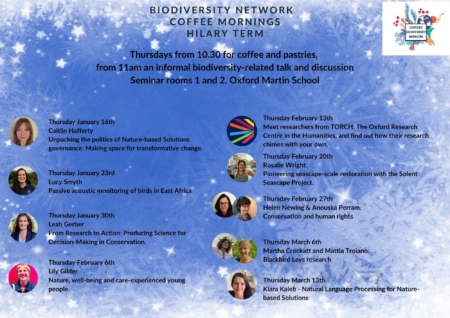
13th March: Klara Kaleb – Natural Language Processing for Nature-based Solutions Accessing high-quality evidence for nature-based solutions (NbS) is challenging due to the vast, fragmented scientific literature. Manual systematic reviews are slow and resource-intensive, often leading to suboptimal environmental decisions. Advances in transformer-based Natural Language Processing (NLP) offer new opportunities to automate evidence synthesis and […]
Dr Eric Mensah Kumeh Remote sensing has been around for almost 150 years, with the earliest forms of remote sensing dating back to the 1800s. The first aerial photographs were taken in 1858 by Gaspard-Félix Tournachon, also known as Nadar, using a hot air balloon. Remote sensing is important because it provides a way to […]
A new open access paper – ‘Unpacking the politics of Nature-based Solutions governance: Making space for transformative change‘ explains that while Nature Based Solutions (NbS) have huge potential to tackle biodiversity loss, climate change, and human well-being, dominant governance approaches can undermine the transformative change we need. NbS have received significant attention worldwide for their […]
dee karen/Shutterstock Stephen Lezak, University of Oxford and Bea Addis, Washington University in St. Louis As the annual UN climate conference, Cop29, draws to a close, negotiators, civil society observers and activists are staying up late, poring over draft texts that will determine how the international community addresses climate change for years to come. Central […]
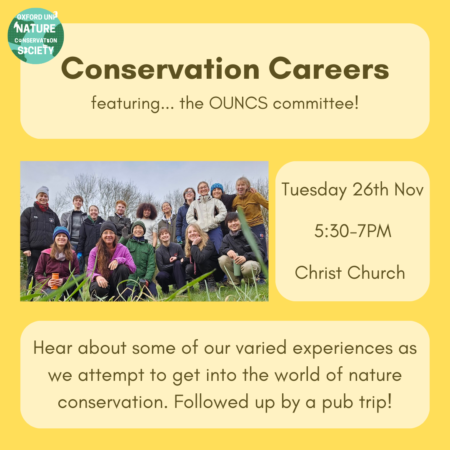
When: Tuesday 26th, 5:30-7 Where: Christ Church lecture room 2 Who for: undergrads with interest in a conservation career Sign up here: https://forms.gle/R8nkb2rGiNFqV44w9 Are you an undergrad hoping to go into a conservation-related career? Hear from the OUNCS committee about some of our varied experiences as we also attempt to get into the world of nature conservation! We all still have many […]
Nathalie Seddon, University of Oxford and Audrey Wagner, University of Oxford Climate change and biodiversity policies have largely evolved in isolation, even though the two crises are deeply intertwined. They have their own UN summits, with the same name and numbering system: the UN biodiversity summit Cop16 just concluded in Colombia, while the climate summit […]