Discover how Oxford’s researchers are tackling the world’s most pressing biodiversity challenges, sharing inspiring stories of innovation, collaboration, and lasting global impact that connect science with conservation action.
In honour of journalist Dom Philips and indigenista Bruno Pereira, a gathering of Indigenous leaders, human rights and environmental defenders, researchers, and practitioners came together on Earth Day to celebrate their lives and build hope for ‘How to Save the Amazon.’ The newly launched paperback version of the book ‘How to Save the Amazon’ uncovers […]
Did you know that only 0.001% of the deep ocean has been visually observed, even though it constitutes two-thirds of the planet? DPhil student Sheena Talma features on the Planet Visionaries podcast to talk about the ocean, and her fascinating research.
April 30th Dr Ada Grabowska-Zhang and Dr Joanna Bagniewska – Connecting nature and connecting with nature – tools, motivations and capacity Society is experiencing an increased disconnection from nature, which not only impacts the environment, its restoration and conservation, but also human well-being. Here we present several projects through which we give people the […]
The report provides empirical evidence for NbS in the Peruvian context and offers policy recommendations that prioritize investments in resilient and sustainable economies. The launch event attracted a diverse audience, including policymakers from the Peruvian Government and practitioners affiliated with prominent local and international NGOs. This confluence of stakeholders’ perspectives underscores the report’s relevance and […]
Author: EJ Milner-Gulland With so much bad news it can be easy to let the good news slip by and focus on the many challenges that conservationists face. But it’s important to celebrate and share our successes, and also to share insights about what lies behind them so that we can learn together; that’s a […]
“Shaping the design and implementation of England’s new biodiversity net gain policy” Researchers whose work has had a significant, wide-reaching impact on the economy, society or environment were celebrated at NERC’s 2023 Impact Awards this week. Dr zu Ermgassen works in the Dept of Biology and his research has raised public awareness about England’s biodiversity […]
We’re proud to be working alongside Sophus zu Ermgassen, who has been nominated for a NERC Impact Award. His research has helped to balance development with nature recovery by informing England’s biodiversity net gain policy. Sophus is a finalist in the NERC Impact Awards 2023, which shine a spotlight on the UK science at the […]
England will soon introduce one of the world’s most ambitious biodiversity policies in “Biodiversity Net Gain”. This policy effectively mandates that any new development leaves biodiversity in a better state than before it was constructed. It was initially meant to go into effect in November, but the government has pushed back its implementation until 2024. […]
The threat of ash dieback on our ecosystems was the focus on BBC Countryfile Professor Yadvinder Malhi, Ecosystems Research Programme Leader at the Environmental Change Institute (ECI) and Tom Atkins, Researcher at the ECI’s Leverhulme Centre for Nature Recovery, shared what they’ve learned during a four-year study at the University-owned Wytham Woods. BBC presenters Hamza […]
Earlier in October, the BBC Countryfile team returned once more to Wytham Woods to film for an upcoming episode, part of the 12-month Wild Britain initiative that’s aimed at galvanising support for saving the UK’s endangered wildlife. Ellie Harrison and Hamza Yassin visited the Woods, with the latter climbing into their canopy to learn more […]
In an article written for the British Ecological Society, Yadvinder Malhi reflects on the Sate of Nature report, published yesterday, September 27th. The latest State of Nature Report rings yet another alarm bell on the biodiversity crisis in the UK, showing major declines in many species since monitoring began in 1970. Since this date, species […]
The Leverhulme Centre for Nature Recovery is interested in promoting a wide variety of views and opinions on nature recovery from researchers and practitioners. If you are interested in writing for us please email us at naturerecovery@ouce.ox.ac.uk. The views, opinions and positions expressed within this guest blog post are those of the author alone, they […]
Meadows Buglife: Managing urban areas for pollinators Buglife: Management of wildflower-rich grasslands for insects Plantlife: Meadow hub Plantlife: No Mow May Monmouthshire County Council ‘Nature isn’t Neat’ initiative (part of the Gwent Green Grid) Biodiversity Wales: Planting for Pollinators Wild Oxfordshire: Community Resources page. Includes signs to download (“Please don’t mow…”) Long Mead’s Thames Valley […]
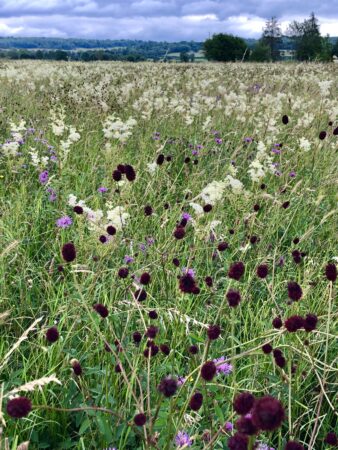
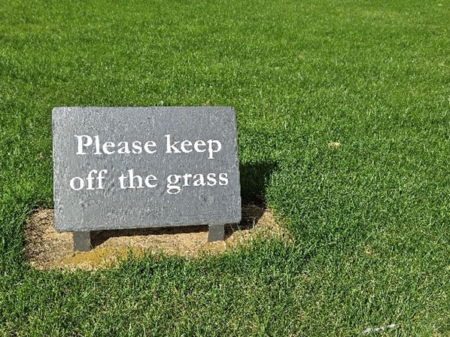
Why do we need to change the way we manage urban grass? Although uniformly short grass used to be seen as a sign of good management, people now are becoming more aware of the value of nature and the need for more nature-friendly management techniques. Frequent mowing removes flowers that provide nectar for bees and […]
As Tasso Leventis Professor of Biodiversity, I work broadly on ways to make humanity’s relationship to nature more sustainable. That’s why I was so proud to be a part of the process that led to the University committing to biodiversity net gain by 2035, one of the two high-level goals of the Environmental Sustainability Strategy (alongside net […]