
The University of Oxford has a long history of the observational recording of nature, in part due to a collection of botanical specimens and illustrations, known as the Oxford University Herbaria.
Liliana Rezende, from the Oxford University’s Smith School reflects on how drawing and documenting nature can help preserve memories, deepen our connection with nature, and contribute valuable insights to scientific research.
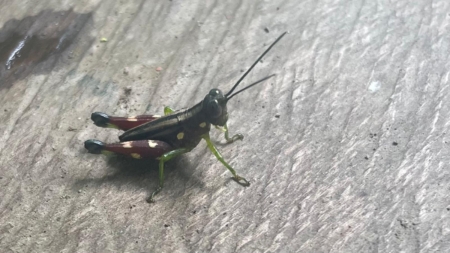
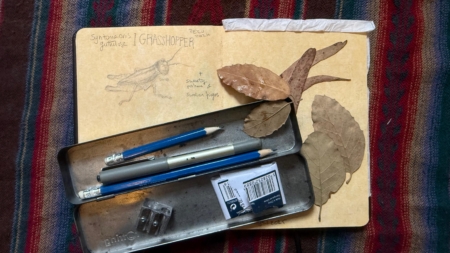
I’m in the middle of the Peruvian Amazon and I spot a grasshopper I’ve never seen before; it looks unusually polka dotted. I dig inside my bag for my notebook to grab a quick sketch. It’s forty-inferno degrees and my palms are sweaty, but I persevere. I choose a HB pencil, and I start marking the paper.
Depicting the natural world has been a human activity since the beginning of recorded history. From prehistoric cave art to photographs and an array of mediums in between, creative expressions of nature have become an unexpected source of information for scientists to understand past biodiversity, how humans interacted with different species, and how species distribution changed over time. For example, a study of European Early Modern paintings (1500 to 1800) show a decline in freshwater species over time, demonstrating the importance of art in helping understand species decline.
This is one of the reasons I draw. I want to preserve the memory and the species I encounter in my travels. And although my hands are swollen from the heat in the Peruvian Amazon, I manage to finalise a decent sketch of the grasshopper.
Plant drawings and specimen collections – like collecting a leaf you found interesting, so you carefully place inside a book for safekeeping – can teach us a lot too. These historical illustrations and herbariums filled with catalogued specimens can help current researchers reconstruct long gone ecosystems. For example, the Oxford University Herbaria is currently being used in three different exhibitions at Oxford.
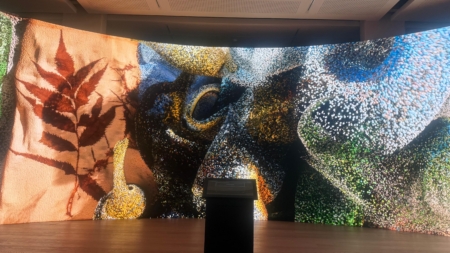
Refik Anadol created beautiful AI dreams with the herbaria’s archives. The greater than live screen features two options of connecting with the archive. The visitor may watch the AI dream where a conceptualisation of part of the archives creates intricate and beautiful shapes. Alternatively, visitors can explore the data. What I found especially interesting was exploring the data by taxa. For example, I searcher for Orchidaceae in Latin America and visualised dozens of specimens.
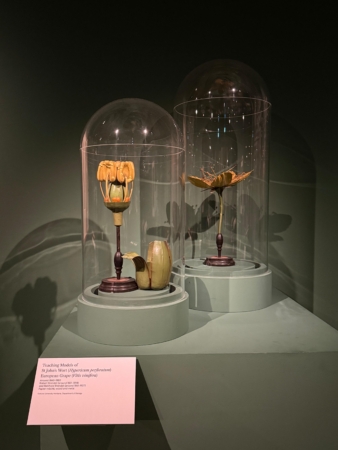
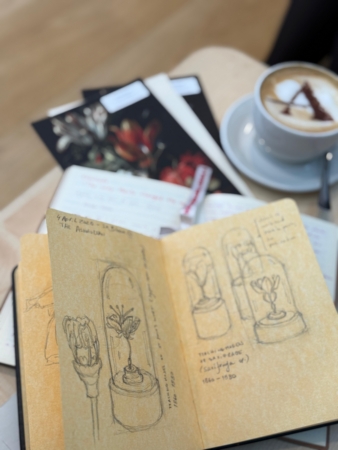
Ashmolean’s In Bloom explains the origins of botany and the study of flora through tracing a “family tree” of the origins of botany. But this is not all – there are smell pods where visitors can smell roses and poppies. It was especially interesting to learn more about the origins of the English rose and the Dutch tulips. Spoiler alert: they’re neither English nor Dutch. Another highlight at “In bloom” were Robert Brendel’s (1821 – 1898) botanical teaching models of enlarged flower parts, which I found fascinating for their craft and detail.
And Flourishing at the Saïd Business School features beautiful illustrations and paintings from Rosemary Wise, Chris Thorogood and Julia Thaxton. This vibrant celebration of plants explores the relationships between nature, people and society.
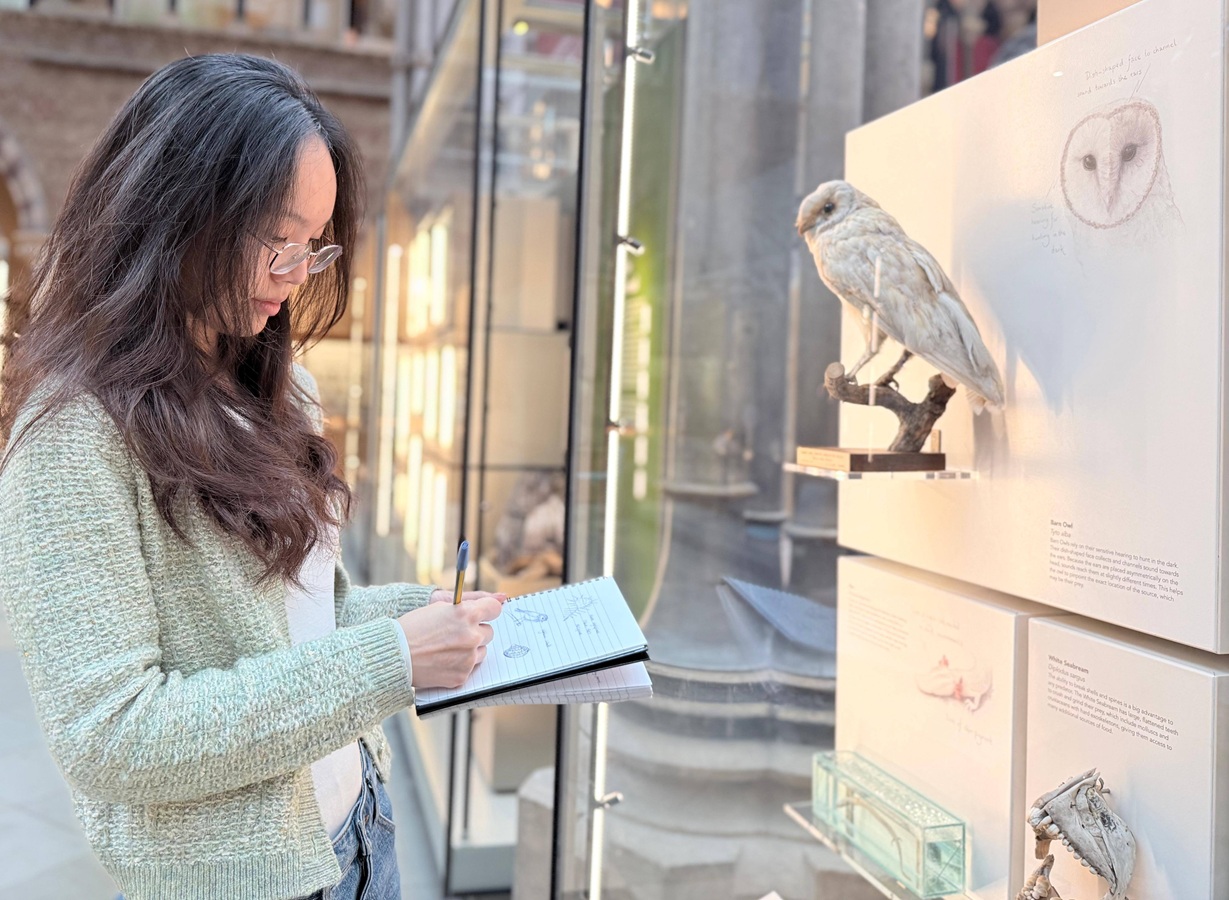
And these relationships can grow beyond looking at the artwork. I was delighted when, during a visit to the Oxford Natural History Museum, I spotted Tianyu Zou drawing a few taxidermy specimens.
“Drawing is such an intimate way of establishing connections with nature.” MSc student Tianyu Zou said. “Through an attempt to recreating the beauty of natural surroundings, I discovered so much treasure hidden in the structure of natural objects and landscapes that one would never be able to capture in a “glance” or photo-taking. My year at Oxford gave me an unprecedented opportunity to truly immerse myself in the rich flora at Oxford Botanical Garden, the songs of birds at the Port Meadow, and the unconventional “Sustainable Corporate Strategy” class at the Oxford Natural History Museum, where the specimens and fossils speaks for themselves.”
-
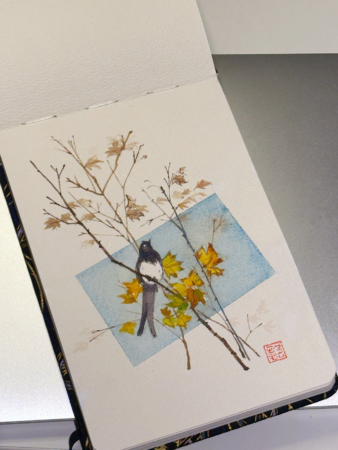
- Tianyu Zou watercolours while studying at Oxford
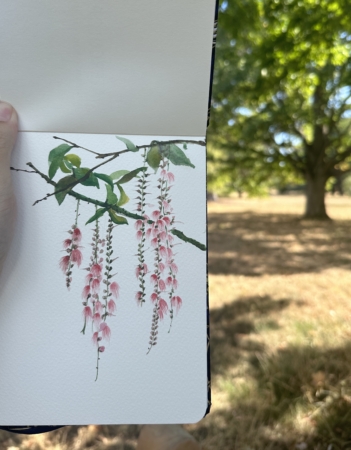
Botanical illustration, the modern technology of its time, became a pillar of botanical science and taxonomy. But less polished illustrations can also forward scientific knowledge. Field sketches, much like my endeavour to register a grasshopper in the Peruvian Amazon, can enhance understanding, focus attention and store memories, and these drawings don’t necessarily require artistic skill, as long as the purpose of the sketch is clear – to produce some markings on paper that will register the curiosity that led to the drawing and the discovery – perhaps an odd shaped leaf, or an unusual polka dotted grasshopper!
Later, back home, I felt my grasshopper needed a redo. I fumbled on my phone, looking for its photo so I could use as a drawing reference. While drawing, I was travelled back in time to that moment in the jungle. I remembered the early evening sky and the longing for a breeze. I could hear the cicadas and the sound of my pencil scraping the paper, as my slippery hands observed the grasshopper intently to make sure I got its proportions right.
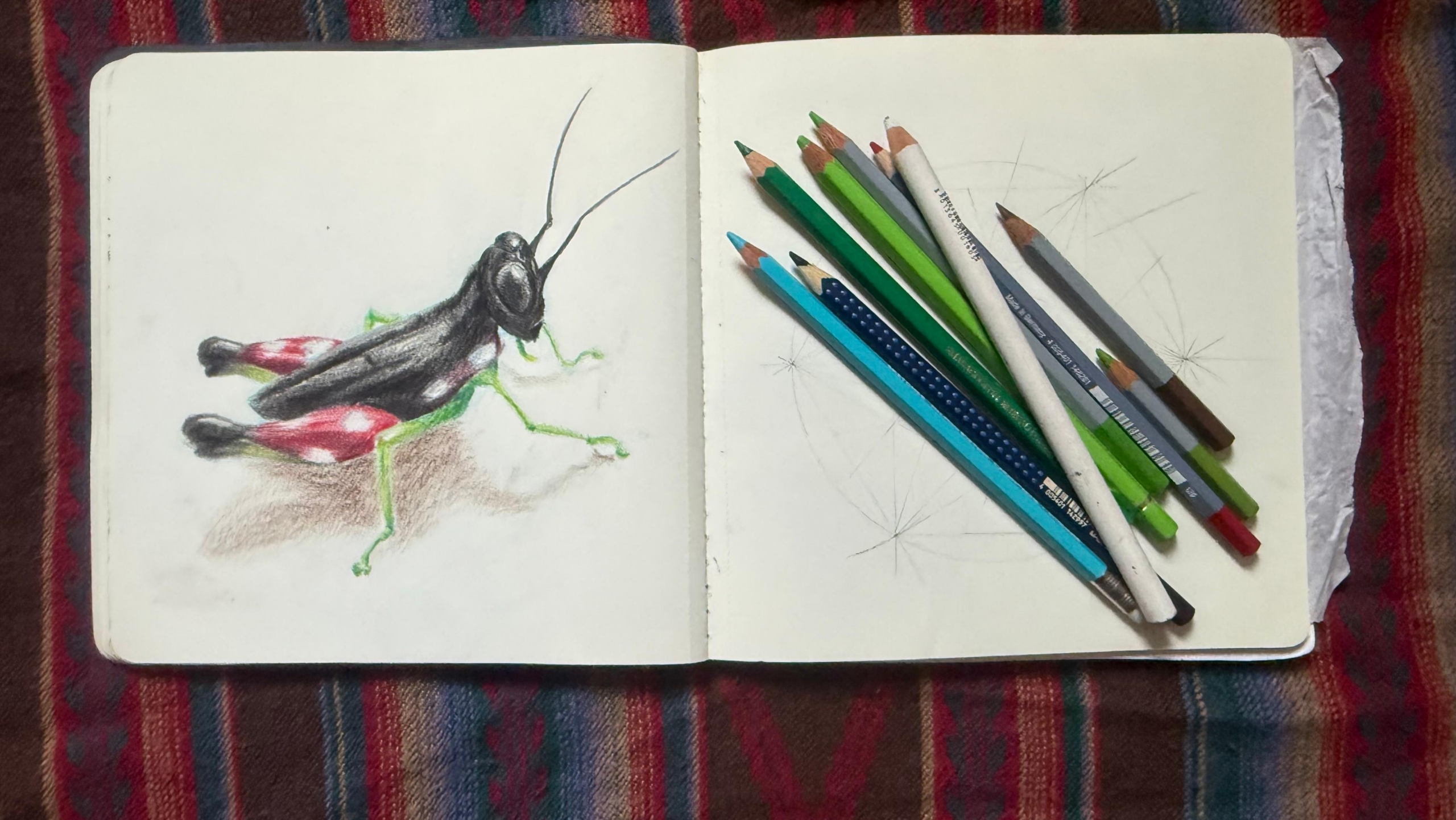
Drawing in nature is a way of reconnecting to the natural world, and research suggests that it can be beneficial for mental health. This is the summer of making your mark. Grab your sketchbook, pencils, and just draw.