
Seminar followed by Q&A – attend in person or join online – all welcome
Abstract: Gardens in Great Britain cover 4.1% of its landmass, an area 3.1x the size of our national nature reserves. Well over half of Brits report that we garden regularly, though many do not see themselves as gardeners.
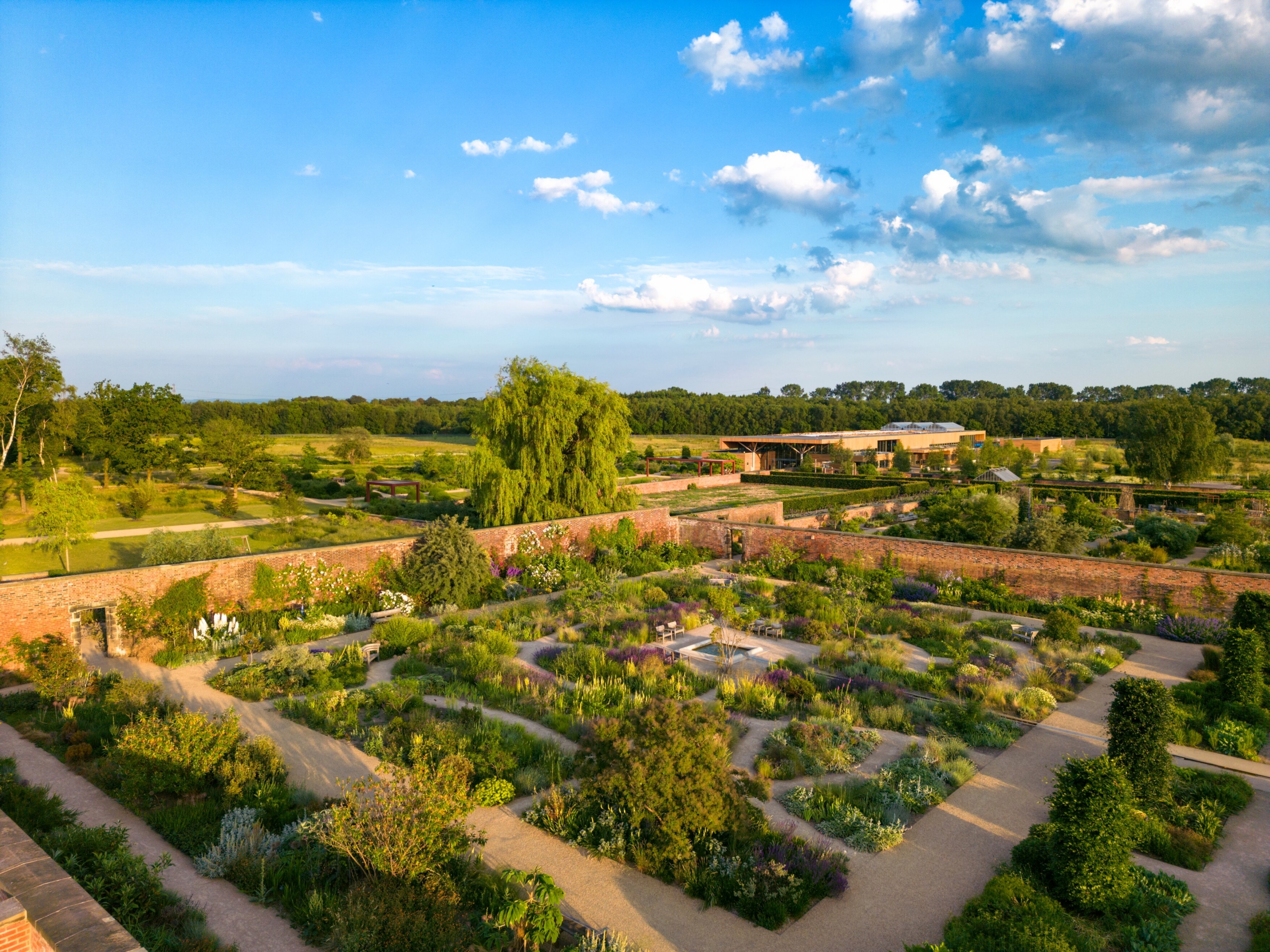
Despite their scale, gardens have received relatively little attention as ecosystems in their own right. Over the last decade, our work at the Royal Horticultural Society has begun to draw up a picture of how these spaces, where humans are an essential and necessary part of the ecosystem, benefit our health and the nature that calls them home. We are studying how gardens support nature, our health and wellbeing, and the ecosystem services provided by the plants we grow.
Ponds, hedges, sheds, lawns and even the compost heap weave a rich mosaic of habitats through our towns and cities. Working with satellite data, ecological surveys and, of course, gardeners, we have found that our cultivated landscapes are home to 50.5 million trees and over half of our native butterfly, amphibian and reptile species.
Gardens also have a social value. Concentrated where we live, they offer a unique connection to, and opportunity to participate in, the natural world, grounding us and allowing us to see ourselves as part of it, while benefiting our health and wellbeing. In London, for example, gardens account for nearly 25% of the city’s landmass. They are a huge environmental resource in the face of climate change, but one that remains underexplored in terms of future climate and food resilience, improving health and wellbeing and, ultimately, bringing us closer to nature and offering joy in the face of adversity.
RHS Director General Clare Matterson, Director of Science and Collections Alistair Griffiths and Senior Policy and Public Affairs Manager George Hudson will explain why gardens matter now, explore the evidence behind this work and the questions that remain, and identify the key levers needed to drive change.
Biographies:
Clare Matterson CBE is Director General of the Royal Horticultural Society (RHS), the UK’s leading gardening charity. She leads the Society’s five gardens, world-famous flower shows including the RHS Chelsea Flower Show, horticultural training programmes, scientific research, education and community outreach, helping to inspire millions of people to garden and connect with nature.
Alistair Griffiths is RHS Director of Science, a Fellow of the Institute of Horticulture and a board member on PlantNetwork. Alistair has a background in both horticulture and science. He leads a highly skilled team of scientists who are focused on assimilating and evaluating the most current scientific knowledge and undertaking scientific research that provides high-quality evidence-based advice and solutions to address horticultural challenges so as to foster and improve beginner, amateur and professional gardening experiences.
George Hudson is Senior Policy and Public Affairs Manager at the Royal Horticultural Society where he leads on an ambitious environmental policy agenda covering everything from the plants of the future to health creation though gardens and gardening. A gardener and writer, he has supported the delivery of community gardening projects and programmes with a range of organisations including the Garden Museum, Design Museum and Public Works. He is a regular contributor to the RHS The Garden Magazine and previously wrote the gardening column in the Evening Standard.
The Leverhulme Centre for Nature Recovery and the Nature Network are interested in promoting a wide variety of views and opinions on nature recovery from researchers and practitioners. The views, opinions and positions expressed within this lecture are those of the author alone, they do not purport to reflect the opinions or views of the Leverhulme Centre for Nature Recovery/Nature Network, or its researchers.